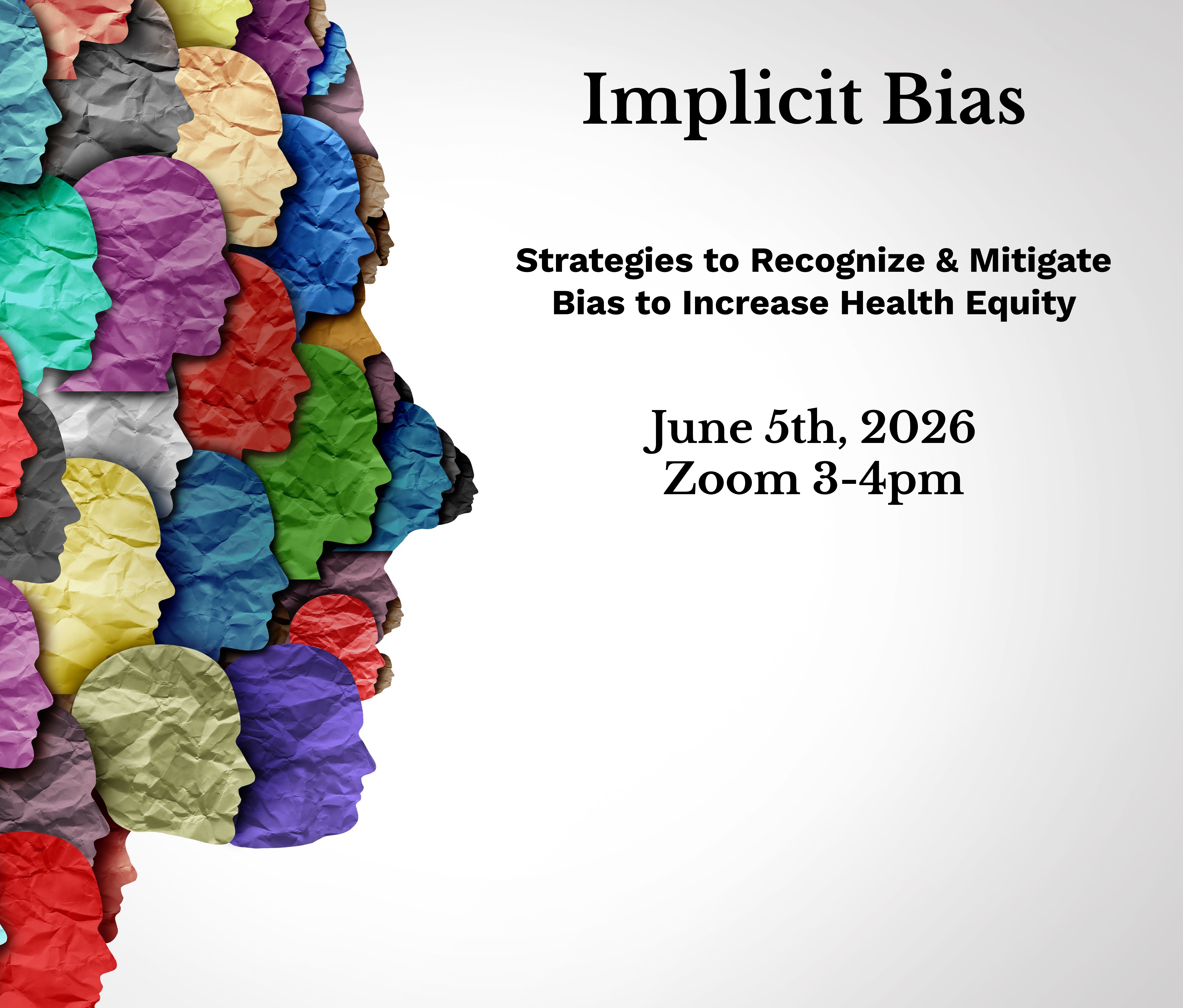
June 5th, Implicit Bias; Strategies to Recognize & Mitigate Bias to Increase Health Equity
Date(s):
- Friday 5th June 2026 Virtual Session
Friday, June 5, 2026 @ 3-4pm EST ( 1 Hr. ADD-ON)
Training
Friday 5th June 2026
(558) Implicit Bias: Strategies to Recognize & Mitigate Bias to Increase Health Equity
Juliette Daniels, Ed.D.
Juliette C. Daniels, Ed.D., M.A., serves as the Associate Dean of Student Services and Enrollment Management at the University Of Detroit Mercy School Of Dentistry and School of Optometry. In this role, Dr. Daniels is the senior student affairs officer responsible for all students enrolled in the dental, dental hygiene, and graduate specialty programs at the School of Dentistry and students enrolled in the optometry program at the School of Optometry. As a presenter, Dr. Daniels’ expertise is in impostor syndrome, suicide prevention, mental health advocacy & awareness, diversity, equity & inclusion, higher education leadership, and fostering student success in post-secondary education. Dr. Daniels’ current research includes ongoing and planned studies of the impact of mitigation strategies to cope with impostor syndrome, factors that influence dental hygiene student wellness, and levels of burnout in dental residency programs. She serves as course director for the first-year seminar course for dental students and as an instructor in the dental ethics and professionalism curriculum. In recent years she has presented at several conferences, including the American Dental Education Association (ADEA) Annual Session, ADEA Fall Meetings, American College Personnel Association, and the NASPA-Student Affairs Educators regional and national conferences. Dr. Daniels is a Deputy Title IX Coordinator, Jesuit Leadership Institute graduate, and a QPR Institute suicide prevention protocol trainer.
This course will explore how implicit bias impacts healthcare providers and patient care outcomes, witha focus upon increasing systemic capacity for health equity. Participants will learn bias recognition andreduction habits to identify and mitigate bias in everyday decision-making as health care providers. The focus of this course is health equity and health justice which will provide a lens through which participants can examine evidence regarding inequity rooted in bias. Participants will learn and further develop tools and strategies to contribute to reducing disparity in the health care system.
Sponsor:Vestrand Consulting, LLC
(558) Implicit Bias: *Strategies to Recognize & Mitigate Bias to Increase Health Equity
Juliette Daniels, Ed.D.
Juliette C. Daniels, Ed.D., M.A., serves as the Associate Dean of Student Services and Enrollment Management at the University Of Detroit Mercy School Of Dentistry and School of Optometry. In this role, Dr. Daniels is the senior student affairs officer responsible for all students enrolled in the dental, dental hygiene, and graduate specialty programs at the School of Dentistry and students enrolled in the optometry program at the School of Optometry. As a presenter, Dr. Daniels’ expertise is in impostor syndrome, suicide prevention, mental health advocacy & awareness, diversity, equity & inclusion, higher education leadership, and fostering student success in post-secondary education. Dr. Daniels’ current research includes ongoing and planned studies of the impact of mitigation strategies to cope with impostor syndrome, factors that influence dental hygiene student wellness, and levels of burnout in dental residency programs. She serves as course director for the first-year seminar course for dental students and as an instructor in the dental ethics and professionalism curriculum. In recent years she has presented at several conferences, including the American Dental Education Association (ADEA) Annual Session, ADEA Fall Meetings, American College Personnel Association, and the NASPA-Student Affairs Educators regional and national conferences. Dr. Daniels is a Deputy Title IX Coordinator, Jesuit Leadership Institute graduate, and a QPR Institute suicide prevention protocol trainer.
This course will explore how implicit bias impacts healthcare providers and patient care outcomes, with a focus upon increasing systemic capacity for health equity. Participants will learn bias recognition and reduction habits to identify and mitigate bias in everyday decision-making as health care providers. The focus of this course is health equity and health justice which will provide a lens through which participants can examine evidence regarding inequity rooted in bias. Participants will learn and further develop tools and strategies to contribute to reducing disparity in the health care system.
Course Learning Objectives:
At the conclusion of the course participants will be able to:
Define health equity, health justice, and social determinants of health
Recognize connections between bias in the health care system and patient care outcomes that
reflect inequity
Develop professional strategies to examine current practices to create ways to identity and
mitigate potential areas of inequity rooted in implicit or unconscious bias
Sponsor:Vestrand Consulting, LLC
This course will explore how implicit bias impacts health equity and creates disparity in patient care outcomes. During this session, strategies to recognize and mitigate bias will be discussed within the context of everyday decision-making in health care settings. Concepts of health equity, health justice, and bias recognition and reduction will be presented.